
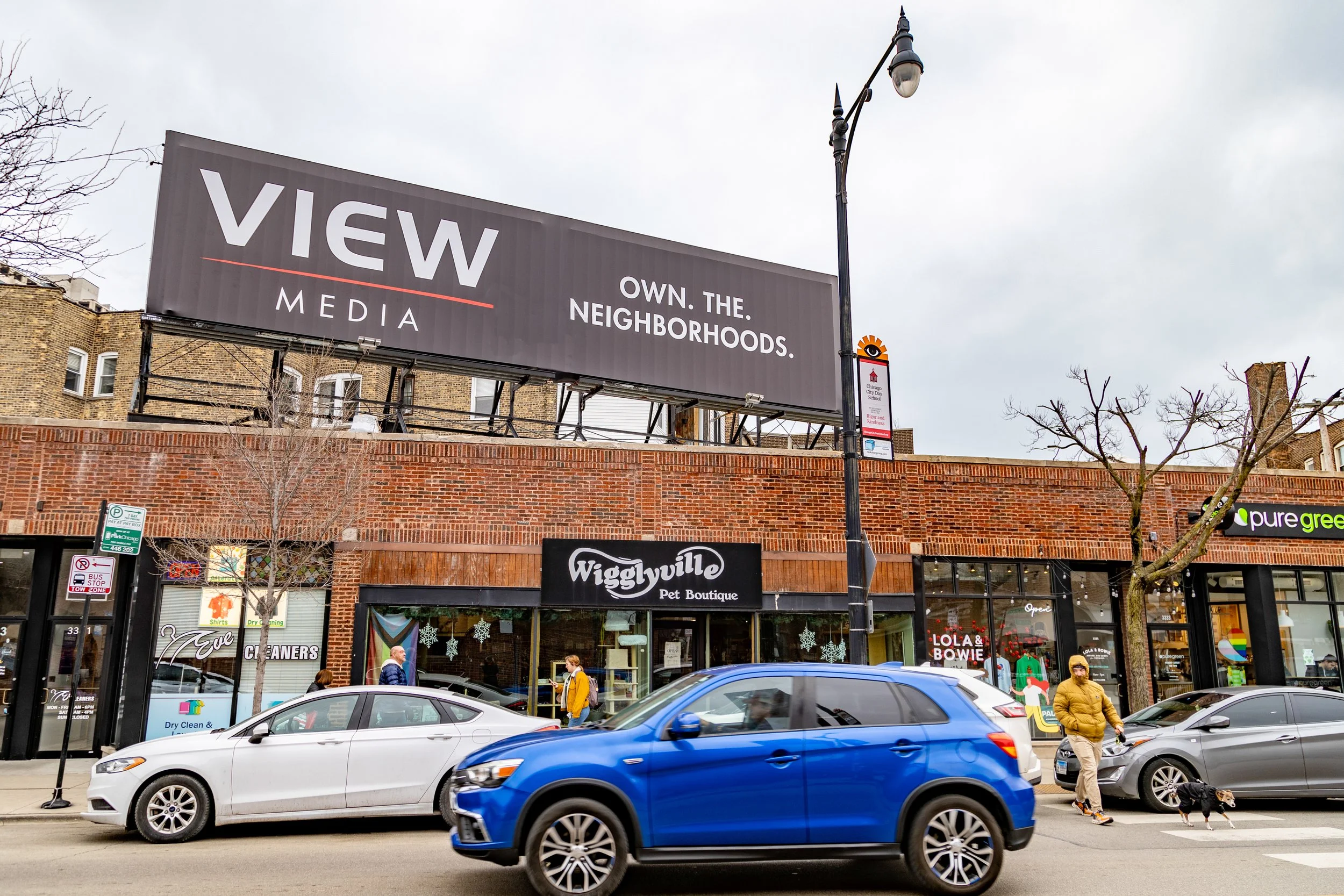
SUMMARY: What Are the Biggest OOH and DOOH Advertising Trends for 2026?
The biggest OOH and DOOH advertising trends for 2026 include hyper-local targeting, dynamic DOOH creative, stronger integration between outdoor and digital campaigns, renewed demand for brand trust, expansion into secondary markets like Milwaukee, and simpler, bolder creative built for fast attention.
As brands finalize their 2026 marketing strategies, one trend has become undeniable: Out-of-home advertising (OOH) is entering a new era. While digital platforms face fragmentation, rising acquisition costs, and trust issues, OOH is climbing in effectiveness, credibility, and cultural relevance. And within OOH, both digital out-of-home (DOOH) and premium static formats are seeing an acceleration in demand — particularly in markets like Milwaukee and Chicago, where brands are leaning into street-level storytelling, cultural resonance, and hyper-local reach.
This article explores the biggest OOH and DOOH trends shaping 2026, why brands are reallocating budgets toward these formats, and how both national and local advertisers are using real-world inventory to build trust, gain attention, and reach consumers at scale.
Trend #1: Hyper-Local Targeting Becomes Non-Negotiable
2026 will be the year hyper-local relevance moves from “nice-to-have” to table stakes. Brands increasingly understand that messaging which speaks to a neighborhood — not just a market — earns more engagement, more trust, and better recall.
Milwaukee and Chicago offer uniquely rich environments to execute this strategy:
Milwaukee: Neighborhood-Level DOOH + Static OOH
In Milwaukee, brands are leaning into:
Digital OOH: Allowing dynamic messaging that changes by time of day, event schedule, or audience patterns.
Static bulletins: Offering long-term visibility along commuter corridors and high-traffic nodes.
Wallscapes: Creating cultural visibility in walkable, high-density districts.
The ability to tailor messaging to specific neighborhoods such as Bay View, Walker’s Point, Third Ward, or Wauwatosa enables brands to maintain relevance without overgeneralizing to the entire market.
Chicago: Premium Static OOH for Street-Level Precision
Chicago’s inventory is static but deeply strategic:
HotSpots deliver mass visibility in controlled downtown placements.
Wild Postings immerse brands in cultural, fashion, and lifestyle corridors.
Wallscapes communicate permanence and scale to dense professional and tourist audiences.
Shelter Dominations & Street Furniture extend campaigns into suburban and commuter flows.
Rather than blasting one generic message across the metro, brands now intentionally shift creative based on:
Neighborhood culture.
Messaging is tailored to reflect the character, values, and energy of specific neighborhoods, whether that means leaning into arts and nightlife districts, family-oriented areas, or business corridors. When creative feels culturally fluent, it signals that a brand understands the community it’s speaking to.Audience demographics.
Brands adjust tone, visuals, and calls-to-action depending on who is most likely to see the placement, such as commuters, young professionals, families, students, or tourists. This ensures the message resonates with real people, not a generalized “market average.”Proximity to retail.
Creative is often designed around how close the audience is to a physical location, store, or point of purchase. Messaging near retail corridors may emphasize immediacy or availability, while placements farther away focus on awareness and brand recall.Daily rhythms.
Brands consider how audiences move through a space at different times of day, such as morning commutes, lunchtime foot traffic, evening events, or weekend travel. Aligning creative with these rhythms helps messages feel timely and relevant rather than static.Local sentiment.
Messaging increasingly reflects what a city or neighborhood is experiencing in the moment, whether that’s a sports season, local event, weather shift, or shared cultural mood. This responsiveness helps brands feel present, human, and in sync with the community.
Key takeaway:
OOH in 2026 is about matching messages to micro-context. Static formats deliver permanence, while DOOH enables adaptive storytelling — but both require geographic intention.
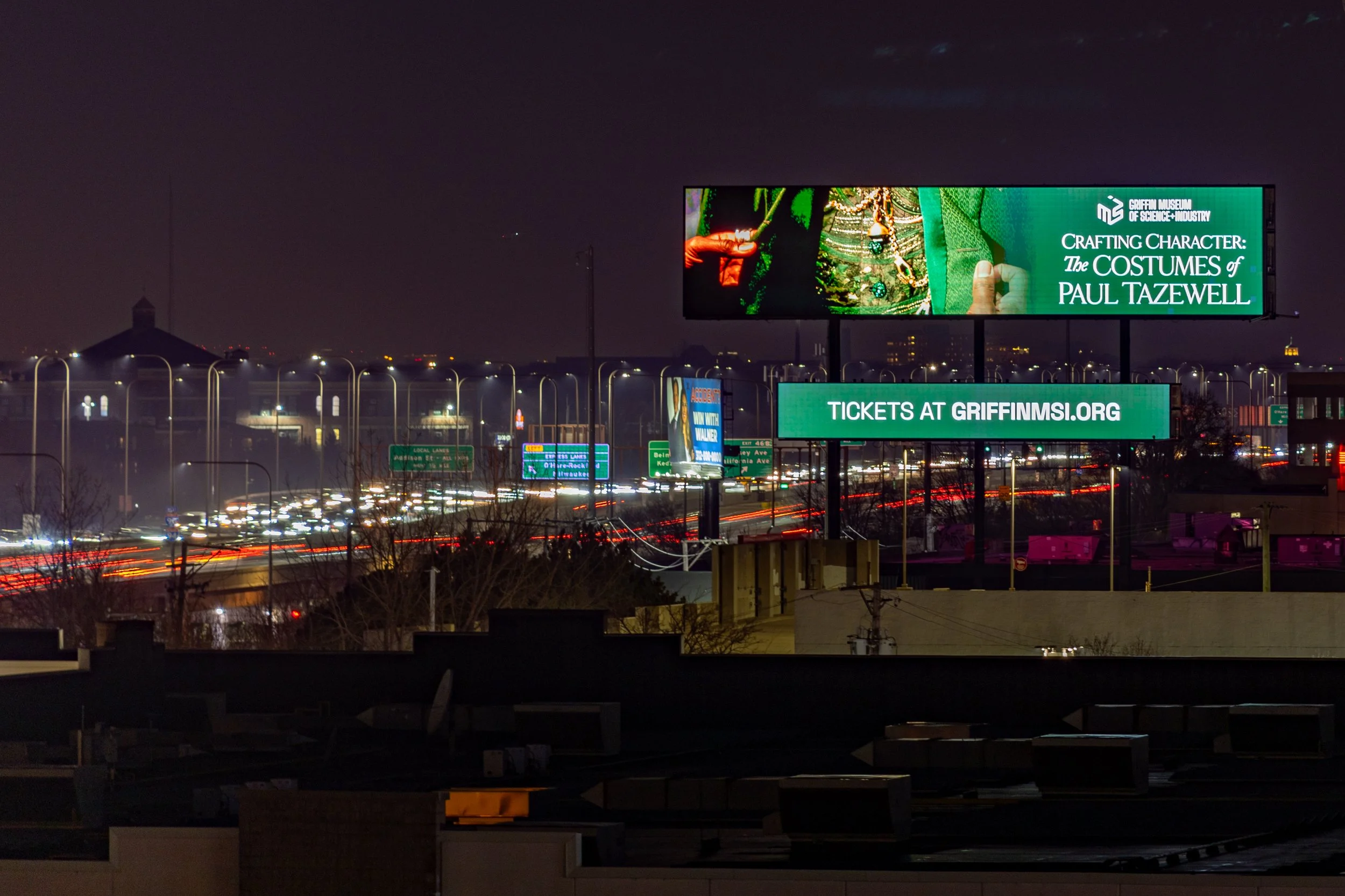
Trend #2: DOOH Growth + Dynamic Content
While much of the country’s DOOH infrastructure is concentrated in major metros, Milwaukee has quietly become a strategic DOOH hub — especially for national brands seeking scalable Midwest reach without the pricing volatility of coastal markets.
Why DOOH Is Growing in Milwaukee
Brands increasingly value DOOH for its ability to:
Update creative in real time (event-based, weather-based, or time-triggered).
Run multiple creatives in rotation without production delays.
Localize messages without added operational overhead.
Test messaging variations for performance learning.
Example use cases now happening in 2026:
A coffee brand rotating “Cold Brew in the Afternoon” content after 2pm.
Retailers promoting store-specific promotions in different zones.
Consumer tech brands aligning messaging to sports schedules.
Travel apps promoting weekend travel during Thursday evening spikes.
As fragmentation increases online, DOOH provides something rare: public visibility + message flexibility.
Static Still Matters — and Is Growing Too
Even with digital acceleration, static OOH is not losing ground. In fact, static formats are benefiting from the DOOH boom because:
DOOH increases OOH mindshare.
Static delivers permanence and credibility.
Static is viewed as more premium in certain corridors.
Static creative often becomes iconic in culture.
Static = brand authority.
Digital = adaptive relevance.
In 2026, brands are buying both.
Trend #3: Traditional OOH + Digital Integration
For years, marketers debated whether to spend on digital channels or OOH. In 2026, that debate is gone — the winning strategy is integration.
Advertisers are now using OOH to reinforce:
paid social
performance media
influencer campaigns
brand storytelling
omnichannel launches
product sampling
retail partnerships
Why OOH Works With Digital Performance Channels
OOH solves several digital marketing pain points:
Boosts brand recall before retargeting.
Signals legitimacy and scale to consumers.
Reduces CAC by lifting branded search.
Helps platforms like Meta + TikTok + Google convert traffic more efficiently.
Surveys have showed that a significant portion of viewers respond to OOH exposure via online engagement, including searches, social interaction, and website visits.
This has led national and regional brands to increasingly use Milwaukee and Chicago OOH placements as:
awareness drivers
trust signals
geo-funnels
retail support layers
OOH in 2026 is no longer just a reach medium — it’s a performance multiplier.
Trend #4: Brand Trust Takes Center Stage
After nearly a decade of over-targeting, hyper-optimization, and data fatigue, consumers are openly skeptical of digital messaging environments. Digital ads chase users; OOH exists in the world — and that distinction matters.
Static bulletins, HotSpots, Wallscapes, and even Wild Postings now function as trust accelerators.
Why OOH Communicates Trust
Research continues to confirm that consumers view OOH as:
harder to fake
harder to spam
harder to personalize without consent
tied to real-world investment
When a brand buys physical space in a city, it communicates:
“We’re real. We’re established. We’re accountable.”
This is especially relevant to:
fintech
consumer packaged goods
insurance
enterprise software
We’ve seen the shift across both markets:
Chicago brands use premium static placements to signal authority to tourists, professionals, and commuters.
Milwaukee brands use digital bulletins to tailor messaging and demonstrate cultural fluency.
2026 takeaway:
OOH wins on credibility at a moment when credibility is scarce.

Trend #5: Expansion Into Secondary Markets
For years, national advertisers concentrated budgets in NYC/LA/SF. In the 2020s, that expanded to Chicago/Austin/Seattle. Now in 2026, brands are expanding again — this time into secondary but highly culturally relevant markets, with Milwaukee becoming a standout.
Why Milwaukee Became a Strategic Market
Several forces converged:
Population inflows from Chicago suburbs + remote workers.
Thriving cultural districts (Third Ward, Bay View, Riverwest, Walker’s Point).
Sports + event-driven identity anchored in Brewers, Bucks, and Marquette.
Lower CPMs than Chicago with high visibility.
DOOH infrastructure providing message flexibility.
For national brands, Milwaukee is a way to:
expand beyond major metro markets
diversify regional spend
test hyper-local messaging
win cultural impressions instead of pure reach
Chicago’s Role in the Expansion
Chicago remains one of the country’s most premium static OOH markets due to:
tourism volume
Fortune 500 density
trade shows & conferences
central downtown walkability
retail flagship corridors
Together, Chicago + Milwaukee allow brands to blanket the Midwest with a mix of:
cultural relevance
premium placement
scalable reach
varied formats
Trend #6: Creative Gets Simpler (and Bolder)
As attention becomes more scarce, creative strategy is evolving. The best OOH campaigns in 2026 are not the most complex — they’re the most essential.
Modern OOH creative now focuses on:
fewer words
bigger typography
simpler calls-to-action
iconic color usage
high contrast
cultural references
brand distinctiveness
Why Simple Works
OOH must be processed in under 1 second. That constraint forces clarity. Brands are stripping away:
jargon
multi-paragraph value props
multi-step CTAs
unclear product explanations
In Chicago, this bold simplicity catches professionals + tourists in motion.
In Milwaukee, it gives digital placements more punch when rotating creative.
Creative discipline becomes a competitive advantage.
How OOH + DOOH Support National Brand Goals in 2026
National advertisers are turning to OOH for four strategic reasons:
1. Trust Signaling at Scale
In a world of synthetic media and deepfakes, physical presence performs as evidence of legitimacy. Brands expanding into healthcare, fintech, enterprise, or regulated categories especially benefit from this halo effect.
2. Simultaneous Market Activation
OOH allows national brands to activate multiple DMAs without needing to coordinate dozens of fragmented digital buys. This reduces operational overhead and increases consistency.
3. Retail & Merch Velocity Lift
National brands selling through:
Target
Walmart
Whole Foods
CVS
Best Buy
use OOH to accelerate retail movement during key windows.
4. Cost-Effective Regional Expansion
Secondary markets like Milwaukee reduce CPM while increasing cultural connection. Brands can test creative here before scaling into Tier 1 metros.

How OOH Supports Local + Regional Brand Goals in 2026
Local and regional businesses are using OOH differently but with the same intent: credibility, reach, and long-term resonance.
1. Local Legitimacy + “City Presence”
Local brands use OOH to appear larger than their organic footprint. A single HotSpot or bulletin can create lasting reputation effects.
2. Talent + Workforce Attraction
OOH is increasingly used by:
universities
hospitals
manufacturers
trades
tech firms
to influence workforce pipelines.
3. Local Purchase Behavior
Restaurants, clinics, real estate, auto, insurance, and home services benefit from being seen repeatedly along familiar commuter paths.
4. Community Alignment
Local brands win when messaging reflects:
sports
seasons
rituals
humor
neighborhood vernacular
It signals: “We’re from here, too.”
OOH Formats: Where They Fit in the 2026 Mix
Below is how each format is functioning in Milwaukee + Chicago ecosystems:
Digital Bulletins
Digital bulletins in Milwaukee are used for dynamic, adaptive, and time-based storytelling that can shift messaging throughout the day or week. They work especially well for national brands, multi-location businesses, and performance-driven campaigns that benefit from contextual relevance—such as QSR, retail, entertainment, telecom, and automotive launches. These placements allow brands to stay current with promotions, seasonal messaging, or citywide moments while maintaining large-format visibility.
Static Bulletins
Static bulletins offer permanence, consistency, and long-term visibility, making them ideal for reputation-building and brand trust campaigns. Automotive groups, healthcare systems, financial institutions, universities, and regional employers often use these placements to establish authority and familiarity over time. Because the creative remains constant, these billboards excel at reinforcing brand recognition through frequency rather than urgency.
HotSpots (Chicago)
HotSpots are premium static placements located in dense, high-foot-traffic pedestrian zones throughout downtown Chicago. They capture audiences who are actively moving through entertainment districts, business hubs, and lifestyle corridors, making them ideal for luxury brands, DTC companies, hospitality, tech, and experiential campaigns. These placements benefit brands that want to feel embedded in the city’s daily rhythm and visible during moments of decision-making and social activity.
Wild Postings (Chicago)
Wild Postings are cultural, lifestyle-driven placements that blend into the urban fabric and deliver strong “cool factor.” Fashion brands, music festivals, beverage companies, streaming platforms, and youth-oriented brands use these formats to feel organic, expressive, and culturally fluent. Because they are often photographed and shared, Wild Postings help brands earn attention beyond the street through social amplification.
Wallscapes (Chicago + Milwaukee)
Wallscapes function as symbols of authority and scale, offering massive, visually dominant placements that often become landmarks. They are frequently photographed, shared, and remembered, making them powerful for national, global, and prestige brands launching major campaigns or reinforcing long-term brand positioning. Industries such as entertainment, automotive, finance, tech, and global consumer brands use wallscapes to signal scale, confidence, and staying power.
Shelter Dominations + Street Furniture (Chicago Suburbs)
Shelter dominations and street furniture placements connect campaigns directly into commuter paths, residential neighborhoods, and retail corridors across the Chicago suburbs. These formats are ideal for brands that rely on repetition and routine exposure, such as healthcare providers, grocery, retail, real estate, education, and local services. By appearing consistently along daily routes, these placements build familiarity and trust through repeated impressions rather than spectacle.
What to Expect Moving into 2026 Planning Cycles
As budget planning accelerates, four predictions stand out:
OOH will gain share from paid social as CPMs rise and targeting becomes noisier.
DOOH will enter attribution cycles as brands demand measurable outcomes.
Retail media will pair with OOH for omnichannel launches.
Brands will double down on cities with unique cultural equity, not just population size.
Milwaukee and Chicago will both benefit from these shifts, but in different ways:
Milwaukee gains from its flexibility, cost efficiency, and digital agility.
Chicago gains from its prestige, density, and iconic static placements.
Together, they enable Midwest coverage that feels intentional instead of generic.
Final Word: The Future Is Physical + Digital, Not Either/Or
The most effective marketers in 2026 won’t choose between:
performance or brand
national or local
digital or physical
static or DOOH
They will build systems where these channels enhance each other.
OOH isn’t replacing digital, and digital isn’t replacing OOH.
Instead, they are becoming mutually reinforcing nodes of influence.
Ready to plan your next OOH campaign?
Connect with our media strategists to explore the right mix of formats, locations, and messaging for your goals in Milwaukee, Chicago, and beyond.