
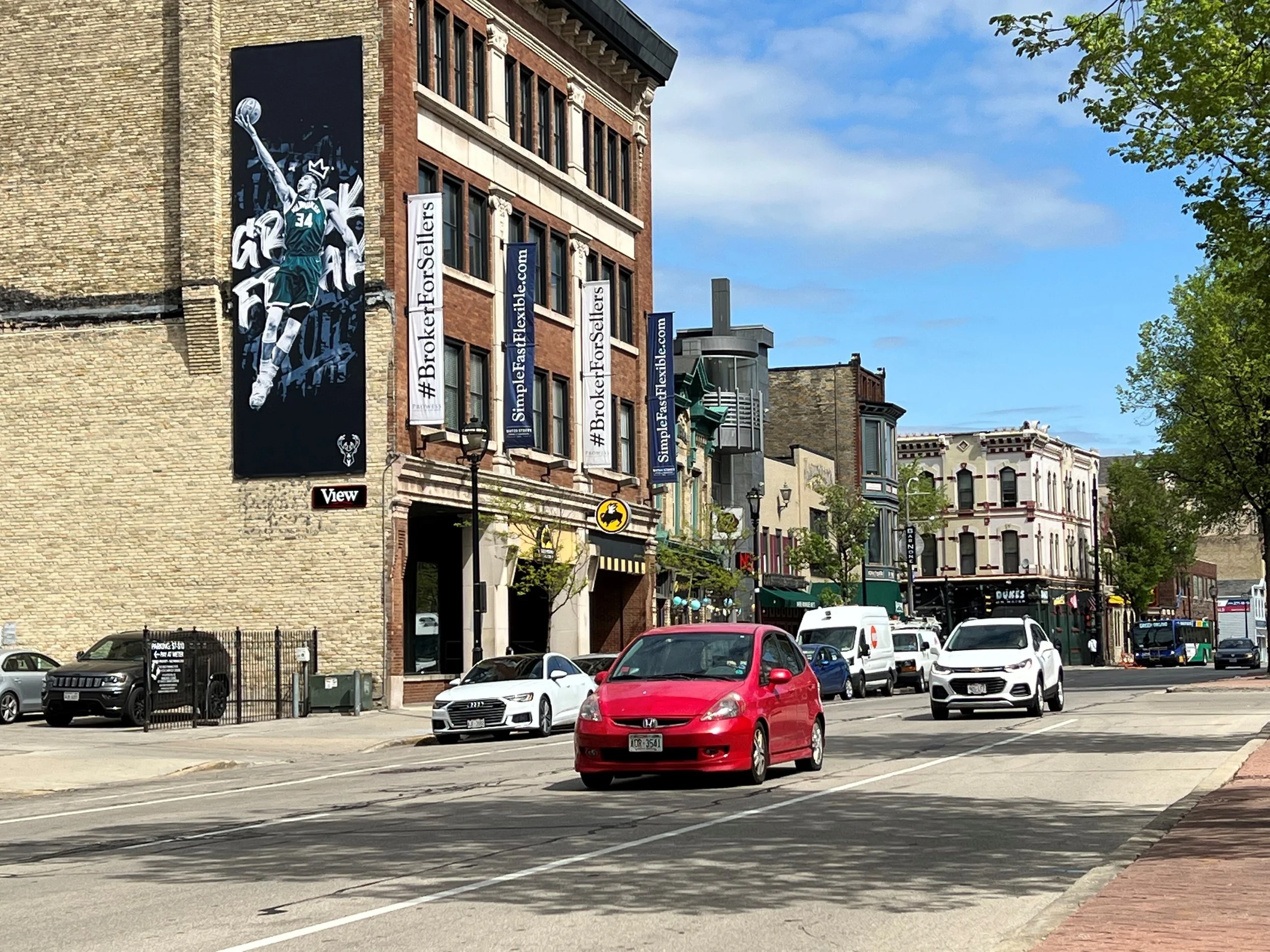
Milwaukee is having a moment.
From the energy surrounding the Deer District to the constant flow of commuters cutting through Westown, Milwaukee has become a fresh, high-value market for brands looking to make an impact through out-of-home (OOH) advertising. And as more national and local brands turn their attention north of Chicago, one thing is clear: Milwaukee billboard advertising is evolving—and the opportunities are bigger than ever.

OOH in Milwaukee isn’t about just showing up. It’s about showing up where it matters. The right placement can put your brand in the path of commuters, fans heading to the Fiserv Forum, families exploring the lakefront, or professionals moving through downtown’s business corridors. But with more choices—digital billboards, traditional billboards, and high-impact wallscapes—comes a bigger question:
Which format is right for your brand?
In this guide, we break down the Milwaukee outdoor advertising landscape, the pros and cons of digital vs. traditional billboards, what brands need to know before choosing a placement, and how to think strategically about owning the neighborhoods that matter most.
Why Milwaukee Is a Growing Market for OOH Advertising
Milwaukee is a city built on neighborhoods—each with its own rhythm, energy, and audience. From the cultural heartbeat of Bronzeville to the waterfront traffic near the Milwaukee Art Museum, every area offers a distinct advertising opportunity.
Why Milwaukee OOH Works
High commuter volume through downtown corridors
Event-driven traffic near the Deer District, lakefront attractions, and festival grounds
A diverse, multi-generational population with strong local loyalty
Tourism and regional travel that keep impressions consistent year-round
When brands search for the best billboard locations in Milwaukee, they’re looking for more than traffic counts. They want visibility that turns into recognition—and recognition that turns into action. In Milwaukee, OOH works because it meets people in real life: on the road, near major destinations, and in the flow of their daily routines.
Digital OOH in Milwaukee: When Digital Billboards Work Best
Digital OOH—often called DOOH—has transformed the way brands show up in urban environments. These dynamic displays allow advertisers to run multiple creatives, update messaging instantly, and deliver campaigns with motion, color, and high-impact visuals.
As Milwaukee digital billboards continue to expand, especially in high-density downtown corridors, DOOH has become a powerful option for brands wanting to stand out—fast.
Milwaukee’s Premiere Digital Example: 6th & Michigan
One of the most valuable DOOH placements in the city sits at the corner of N. 6th Street and Michigan Avenue—a standout display capturing commuters, event-goers, and daily downtown traffic. This location:
Sits steps from the Fiserv Forum, home of the Milwaukee Bucks
Reaches a diverse and engaged audience moving through downtown
Offers exceptional visibility from multiple angles
Places brands inside a vibrant entertainment + business district
It’s DOOH Milwaukee at its best—dynamic, illuminated, and impossible to ignore.
When Digital OOH Is the Right Choice
Digital placements work well for:
✔ Time-sensitive campaigns
✔ Seasonal promotions
✔ High-frequency brand awareness
✔ Brands needing multiple creatives
✔ Advertisers wanting motion or animated elements
If your strategy involves flexibility, fast iteration, or visual storytelling, digital billboards are unmatched.
Traditional OOH in Milwaukee: Why Static Billboards Still Matter
Digital brings flexibility. Traditional brings staying power.
Traditional billboards—and especially wallscapes—offer advantages that DOOH can’t replicate. They’re bold. They’re constant. They become part of the built environment.
In a time when audiences crave authenticity and trust, traditional Milwaukee billboard advertising delivers something digital can’t: a sense of establishment.
Why Traditional Billboards Still Make an Impact
24/7 visibility with no ad rotation
Larger-than-life scale that commands attention
Cultural integration with the neighborhood landscape
Long-term association with a specific corridor or district
Traditional billboards perform especially well for:
✔ Healthcare systems
✔ Financial institutions
✔ Higher education
✔ Real estate
✔ Any brand building long-term trust
The Wallscape Advantage
Wallscapes—massive printed installations attached to building sides—are one of the most powerful formats in OOH.
They dominate. They shape the visual identity of a street. And they offer enormous creative real estate for striking, memorable campaigns.
In Milwaukee (and in markets like Chicago), wallscapes are often placed at high-traffic intersections with slower vehicle movement—giving audiences more time to absorb the message. Traditional OOH may not rotate or animate, but that’s exactly what gives it strength.
It behaves like a landmark.
Digital vs. Traditional Billboards: Which One Should You Choose?
Here’s the truth: There’s no single best format. There’s only the best format for your goals.
Let’s break it down using insights from real Milwaukee outdoor advertising behavior.
Choose Digital If You Need:
✔ Flexibility
Perfect for brands that need to update messaging regularly or run multiple creatives. Digital lets you adapt in real time—aligning your message with seasons, promotions, and event-driven traffic without added production delays.
✔ Motion & High Visual Impact
Digital is inherently eye-catching, especially at night or in busy downtown corridors. Movement and light draw attention instantly, which makes DOOH ideal for competitive urban environments.
✔ Fast Turnaround
Digital billboards can go live quickly without printing or installation. This is a strong fit for urgent campaigns, last-minute media buys, or brands moving at a fast pace.
✔ Campaign Tests
Trying different messages? DOOH allows easy A/B testing. You can rotate copy, visuals, or offers and learn what lands best—then refine quickly to maximize performance.

Choose Traditional If You Need:
✔ Permanence
Nothing signals confidence like a long-term wallscape or billboard takeover. Traditional formats create constant presence, reinforcing your brand day after day without interruption.
✔ Brand Trust
In challenging economic times, permanent OOH placements reinforce credibility. Audiences associate long-term installations with stability, authority, and staying power.
✔ Maximum Visibility
Traditional billboards offer uninterrupted ownership—no rotation, no shared screen. You control 100% of the impression share, ensuring every passerby sees your message exactly as intended.
✔ Landmark Presence
A well-placed wallscape becomes part of a neighborhood’s identity. These installations act as cultural touchpoints—recognized, remembered, and often referenced long after the campaign ends.
How to Choose the Right OOH Format in Milwaukee
Choosing the wrong format—or the wrong location—is one of the most common mistakes brands make. Instead, consider these factors:
1. Audience Behavior
Are you targeting:
Commuters?
Downtown professionals?
Event attendees?
Tourist traffic?
Each of these groups experiences Milwaukee differently. Commuters benefit from high-visibility placements along major routes and downtown corridors where repetition builds familiarity. Event attendees respond well to digital units near entertainment districts, especially when messaging can change quickly around game days, weekends, and seasonal surges. Professionals and tourists often move through predictable paths—making traditional boards and wallscapes powerful for long-term recall.
Understanding how your audience moves is step one in choosing the right placement.
2. Campaign Objective
Is your goal:
Brand awareness?
Trust building?
Recruitment?
Store traffic?
Product promotion?
Different objectives require different OOH strategies. A broad awareness campaign may prioritize visibility at scale—especially through digital corridors and major commuting routes. Trust-building campaigns (healthcare, finance, education) often perform best with long-term traditional placements that signal permanence. Recruitment campaigns benefit from consistent visibility near employment corridors. And product-driven campaigns often win with digital, where creative can update quickly.
OOH isn’t one-size-fits-all; the right format supports the right role in the funnel.
3. Budget Allocation
Digital can be cost-effective for shorter campaigns. Traditional performs well in long-term branding.
DOOH offers flexibility and shorter commitments, making it ideal for brands testing Milwaukee or running time-sensitive promotions. Traditional formats deliver unmatched impact over time—becoming part of the visual landscape and building trust through consistency.
Think of digital as sprinting and traditional as marathon branding. Both have their place depending on budget and timeline.
4. Creative Assets
Some creatives demand motion. Others demand scale.
If your message relies on dynamic storytelling, animation, or multiple variations, digital gives you the canvas. But if your creative depends on bold imagery, simplicity, and commanding presence, traditional wallscapes allow your artwork to breathe—and dominate.
Aligning creative with format prevents wasted impressions and maximizes stopping power.
5. Milwaukee Neighborhood Fit
OOH is never “one size fits all.” Matching your placement to your audience’s environment is crucial.
Milwaukee neighborhoods vary widely in demographics, density, and traffic flow. A placement that works for a tourism campaign may not be (and often isn’t) the right fit for a healthcare provider—or vice versa. The best campaigns aren’t just visible; they’re context-aware.
Choosing the right corridor ensures your message reaches the people who will act on it.
More brands are searching for “how to choose a billboard” because the landscape is evolving. Formats are expanding. Competition is rising. And strategic placement matters more than ever.
When to Use Multiple OOH Formats in One Campaign
Mixing OOH formats amplifies frequency, reach, and message retention. A multi-format strategy is especially effective in markets like Milwaukee, where audiences move through the same corridors repeatedly through daily routines.
A mixed campaign could look like:
A digital billboard for flexible messaging and high-frequency visibility
A traditional billboard or wallscape for constant, landmark-level presence
A second placement in a complementary corridor to increase coverage and repetition
This layered approach keeps your message top-of-mind—especially during peak seasonal cycles and major city events. It also helps brands move from “seen once” to “recognized everywhere.”
Milwaukee OOH Advertising Trends to Watch in 2026
With more brands entering the Milwaukee market, competition is rising—and so is innovation.
Here’s what’s shaping the next year:
Neighborhood-first placement takes priority
Brands want OOH that feels specific, local, and aligned with the way people move through cities.DOOH growth accelerates
Milwaukee digital billboards are becoming more in-demand because of their flexibility and prominence downtown.Creative simplicity wins
Bold, minimal designs outperform text-heavy campaigns—especially at speed.Trust building through permanence
More brands are adopting long-term wallscapes to reinforce credibility and stability.Multi-format strategies become the norm
Advertisers are stacking placements to increase repetition, coverage, and recall.
As 2026 approaches, Milwaukee’s OOH landscape is evolving into one of the Midwest’s most compelling markets—high opportunity, high visibility, and increasingly competitive.
Why Hyper-Local Wins: The View Media Approach
At View Media, we believe great outdoor advertising doesn’t just reach people—it meets them where they live their lives.
Where they commute.
Where they gather.
Where real decisions are made.
Our placements are chosen with purpose. Our strategies are built around neighborhoods, movement patterns, and the moments where brands actually get remembered. And with our expansion into Milwaukee, we’re bringing the same grit, energy, and precision of our Chicago DNA into a growing, dynamic market.
Whether your brand is national or local, Milwaukee billboard advertising can be the difference between being noticed and being remembered.
Your message deserves to be seen.
Not once. Not occasionally.
But every single day—in the neighborhoods that matter.
Choosing Your Milwaukee OOH Placement
OOH advertising works. But it works best when you choose a strategic mix of:
✔ The right neighborhood
✔ The right audience
✔ The right format
✔ The right message
Digital billboards. Traditional billboards. Wallscapes.
Each one plays a role. Each one brings something different to the table. And when done right, each one helps your brand own the corridors that define Milwaukee.
If you’re ready to explore Milwaukee OOH opportunities and find the right placement for 2026 and beyond, View Media is here to guide the way.
Explore what’s possible. Own the neighborhoods. Contact our team of experts to get started.
Thinking Beyond Milwaukee? Chicago May Be the Perfect Fit for Your Brand, Too
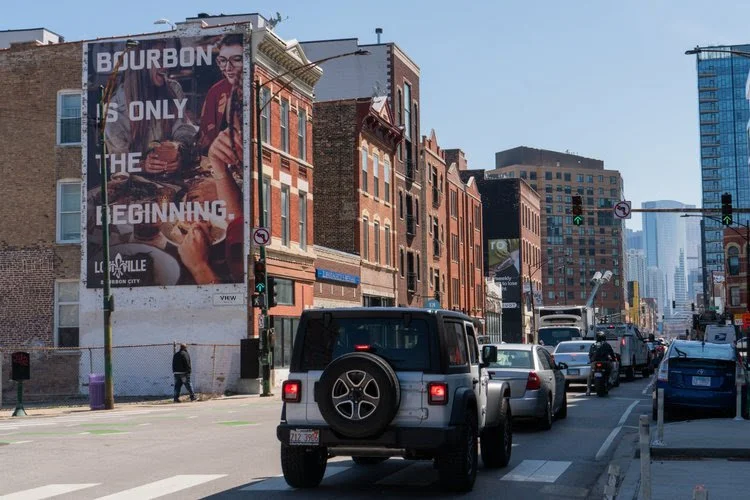
Milwaukee is a powerful market—but it’s only one part of the Midwest’s OOH opportunity. If your campaign requires more density, more neighborhood variety, or broader reach, Chicago offers a complementary layer to your strategy.
Chicago’s neighborhoods—Bucktown, West Loop, Lincoln Park, Pilsen, Wicker Park, Bridgeport—each come with their own culture, traffic patterns, and brand touchpoints. The city delivers:
High-volume commuter traffic across expressways and major corridors
National tourism visibility in key districts
Street-level engagement in walkable, retail-heavy neighborhoods
Premium wallscape inventory that functions as long-term landmarks
If you’re exploring OOH across multiple markets, Chicago may be the right addition—or the better starting point.
Want to see what Chicago offers? Explore our Chicago placements.